
"coffee tree damage"
3000 article(s) found

Introduction to the taste characteristics of Yega Shifeiwaka coffee quality and flavor manor
Although the Ethiopian Yirgacheffe coffee is petite, it is gentle and delicate and sweet. As the hometown of coffee, thousands of years of planting history and processing tradition in Ethiopia have created high-quality washed Arabica beans. Light baking has unique sweet aromas of lemon, flowers and honey, soft acidity and citrus flavors, fresh and bright on the palate. No.

Sun-treated Yejia Xuefei Coffee beans introduce Fine Coffee
There is a strict standard for collecting red fruits (as a result of coffee trees). Before exposure to coffee fruits, unripe green fruits or defective fruits are removed manually, and damaged or moldy fruits are removed during the sun drying process. after two weeks, the flesh sugar and essence seeped into the coffee beans, the water content was reduced to 12%, and then scraped off the hardened pulp, pectin layer and pods with a planer to remove the coffee.

Cultivation techniques of small-grain Coffee in Yunnan Province: disease Control
1. Coffee rust is the main disease of coffee, the most harmful, the damaged plants, light reduced yield, serious death. Coffee rust is mainly harmful to leaves and sometimes to young fruits and twigs. After the leaves were infected, many light yellow spots appeared at first and enlarged in the form of water stains, followed by orange-yellow powdery spores on the back of the leaves, and there was a light green halo around the disease spots, which gradually expanded or connected in the later stage.

A brief introduction to the Origin, Development, History and Culture of Fine Coffee beans in Honduras
Honduran coffee can lead to multiple levels of flavor depending on the degree of roasting. Moderate baking can maximize the sweetness of beans, while deep baking increases bitterness, but sweetness does not disappear. Generally speaking, medium roasting has the best taste and rich and unique aroma, which is favored by coffee lovers in Honduras. High-quality coffee in Honduras is washed.

Intense Jasmine Flower Yerga Sherfi Aroma Flavor Description Grindness Variety Treatment Method Introduction
Strictly speaking, Yejia Shefei is a subsidiary production area of West Damo. This town is located in the northwest of West Damo, surrounded by mountains and lakes, and is one of the coffee producing areas with the highest average altitude in Egypt. However, the production method and flavor here are too prominent, causing Egyptian coffee farmers to compete to be proud of their coffee with Yejia Shefi flavor, so they are independent from West Damo and become their own school.

Fresh and bright Yega Chefevoca Coffee Flavor description Grinding degree Price Taste treatment method
Yega Xuefei uses the oldest sun treatment method, but in 1972, Ethiopia introduced Central and South American water washing technology to improve its quality, which made its jasmine and citrus fragrance clearer and more refined, and became one of the best beans in the world. Superb washing technology played an important role. After the 1970s, it was basically washed by water. However, in the past two years, Yega Snow has been out of order.

A special term for explaining high-quality coffee beans.
Caramelization tester: this is the baking degree index used in the United States. The baking degree is expressed from the shallowest 100 to the deepest 25, meaning (the baking degree is about Agtron50). The determination relies on a special chromatic aberration judgment called Agtron M-Basic. Arabica species: together with Robsta species and Leiberia species, they are called the three primary species of coffee. The original farming is the cloak.

Introduction of Colombian Huilan Coffee Flavor description, Grinding characteristics, treatment method, Fine Coffee
Compared with other producing countries, Colombia is more concerned with developing products and promoting production. It is this, coupled with its superior geographical and climatic conditions, that makes Colombian coffee excellent in quality and delicious and famous all over the world. The status of coffee in Colombia is evident in the following example: all vehicles entering the country must be sprayed and sterilized so as not to inadvertently cause disease and damage coffee trees.

Is Rainforest Certification good Coffee? rainforest Alliance Certified Coffee
Professional coffee knowledge exchange more coffee bean information Please pay attention to the coffee workshop (Wechat official account cafe_style) drinking a cup of mellow coffee will damage the environment, I am sure many people will question the truth of this statement and think it is false. Indeed, the act of drinking coffee and coffee itself will not damage the environment, so why do you say so? Many people like to drink coffee, coffee

Introduction to the Flavor characteristics of Ethiopian Yega Snow Coffee
Yega Xuefei Coffee Sun sets a strict standard for collecting red fruits (as a result of coffee trees). Before exposure to coffee fruits, unripe green fruits or defective fruits are manually removed, and damaged or moldy fruits are removed in the process of sunlight. after two weeks, the flesh sugar and essence seep into the coffee beans, the water content is reduced to 12%, and then the hardened pulp, pectin layer and pods are scraped with a planer.
Prevention and treatment of small Coffee Tree virus
Coffee rust is the main disease of coffee, the most harmful, the damaged plants, light reduced yield, serious death.

Introduction to the sweet and lovely Yega Chefevoca Coffee Flavor description and treatment method in the planting environment
Although the Ethiopian Yirgacheffe coffee is petite, it is gentle and delicate and sweet. As the hometown of coffee, thousands of years of planting history and processing tradition in Ethiopia have created high-quality washed Arabica beans. Light baked with unique sweet aromas of lemon, flowers and honey, soft acidity and citrus flavors, fresh and bright on the palate.

Introduction of Burmese Coffee Culture Analysis of main Coffee varieties in Myanmar
Over the past few years, Myanmar's coffee industry has emerged on the international stage with the cooperation of the Myanmar Agricultural Promotion Agency (Myanmar Agriculture Department), the United States Agency for International Development (USAid), the Coffee quality Association (CQI) and the country's hard-working coffee farmers. When British missionaries introduced the first coffee trees from Costa Rica nearly a hundred years ago, the coffee industry

Introduction to Coffee for beginners: an explanation of some words in Coffee
Caramelization tester: this is the baking degree index used in the United States. The baking degree is expressed from the shallowest 100 to the deepest 25, meaning (the baking degree is about Agtron50). The determination relies on a special chromatic aberration judgment called Agtron M-Basic. Arabica species: together with Robsta species and Leiberia species, they are called the three primary species of coffee. The original farming is the cloak.
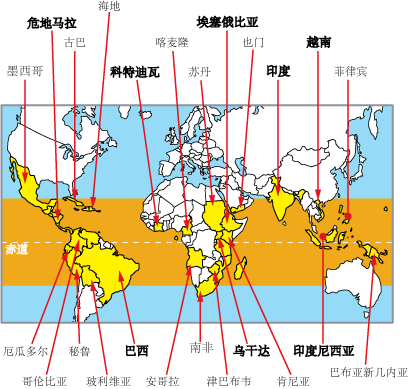
Coffee producing area 53 coffee producing areas worldwide Bolivian coffee producing area Bolivia coffee
Bolivia from serving as a garden hedge to coffee grown exclusively on a manor. In the past, Bolivian coffee trees used to act as hedges around the garden, decorating flowers and trees. Real commercial production began in the early 1950s. The coffee industry in Brazil was badly damaged by the great frost in 1957, while Bolivia (Bolivia) benefited and developed rapidly. Glass

Is it good or bad in coffee beans?
Peaberry or caracoli is a variety of coffee beans. In fact, male beans are a defect, officially speaking, coffee beans that cannot develop normally. The causes are usually insect damage, drought, or malnutrition of coffee trees. Under normal circumstances, the fruit of the coffee tree contains two coffee beans, each of which is flat and hemispherical.

Is Peaberry good or bad in coffee beans?
Peaberry or caracoli is a variety of coffee beans. In fact, male beans are a defect, officially speaking, coffee beans that cannot develop normally. The causes are usually insect damage, drought, or malnutrition of coffee trees. Under normal circumstances, the fruit of the coffee tree contains two coffee beans, each of which is flat and hemispherical.
Bolivia, an estate that specializes in growing coffee
From serving as a garden hedge to coffee grown exclusively on the manor, coffee trees in Bolivia used to be planted around the garden as hedges, decorating flowers and trees. Real commercial production began in the early 1950s. The coffee industry in Brazil was badly damaged by the great frost in 1957, while Bolivia (Bolivia) benefited and developed rapidly. Bolivian coffee in the sea
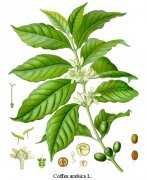
Coffee cultivation techniques detailed explanation of planting knowledge of Coffee trees
Coffee, cocoa and tea are called the three major beverages in the world, and their output, consumption and output value all rank first. In addition to being used as a beverage, coffee can also extract caffeine and coffee oil; in medicine, it can be used as an anesthetic, stimulant and diuretic cardiotonic agent. Coffee pulp can be used to make wine, vinegar, pectin and molasses; dried pulp can be used as animal feed; dried fruit shell can be used as fertilizer and burning

Coffee in moderation refreshes the mind and hurts the body
The word "coffee" comes from a small town in Ethiopia called Kaffa, which means "strength and passion" in Greek.